Real War: Not Fake
- 3.4
- Rating
- 500.00K
- Installs
- Free
- Price

 Analysis by App-foxy
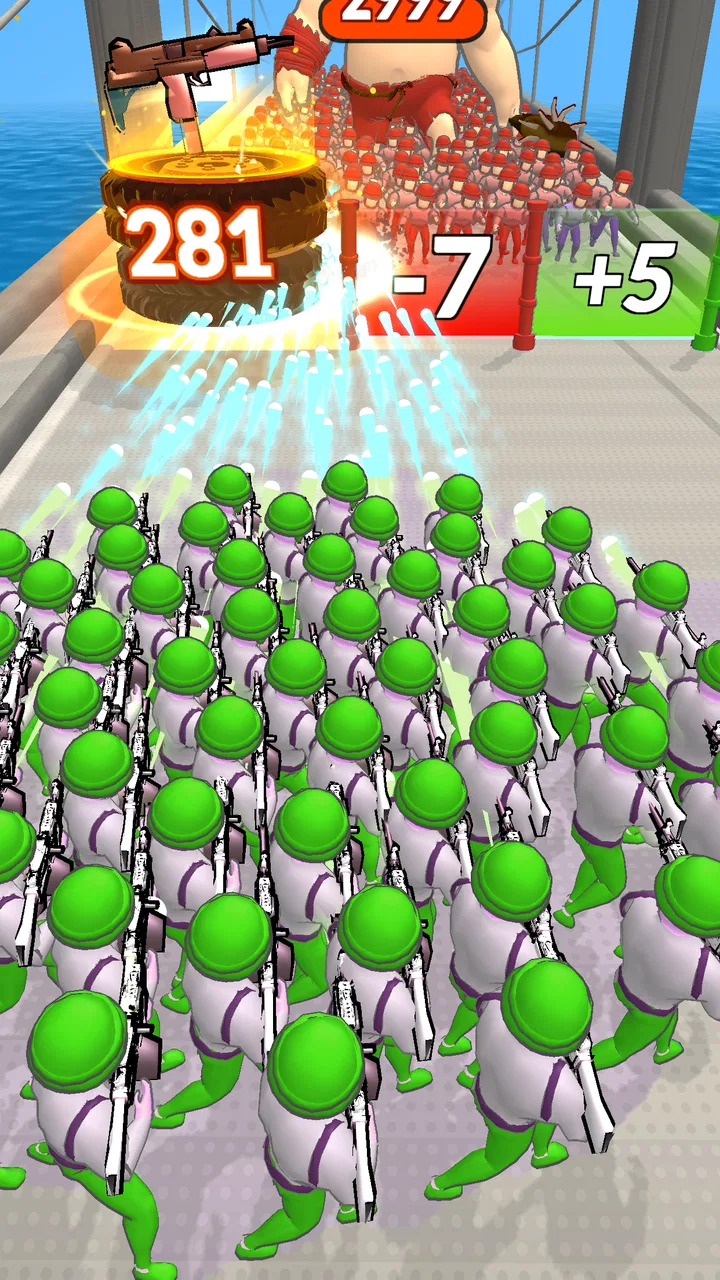
Real War: Not Fake is an action game from Heseri Games that immediately makes a simple promise: stay alert, move at the right moment, and survive the pressure. I found its appeal easy to understand during the first sessions. It is built around quick reactions rather than a slow, complicated introduction, so I could begin playing without spending a long time learning menus or systems. That directness is its strongest first impression, but it also raises an important question: does the game remain interesting once the novelty of shooting, defending, dodging, and fighting wears off?
My short answer is that it can, especially if you enjoy compact action games that are easy to pick up in spare moments. However, I would not treat it as a complete replacement for a deeper action title. Its value depends on whether you want immediate engagement or a large long-term structure to explore. The game is free to download, carries an Everyone 10+ rating, and has passed over one hundred thousand installs, so it has already found an audience beyond a small experiment. Its current version is 4.6.9, and that matters because a game focused on repeated action needs to feel dependable each time I return.
How the first week feels
During the first week, the main strength is accessibility. Real War: Not Fake does not need to convince me with a long story before allowing me to act. The central loop puts attention on movement, defense, attacks, and timing. That makes it a useful choice when I have only a few minutes and want something more active than a puzzle or idle game. I can open it with a clear expectation: the session will be about handling immediate danger rather than managing a large collection of long-term tasks.
You May Also Like

 Blood Strike: 2.5 Anniversary
Blood Strike’s Loadouts Turn Every Drop Into a Tactical Gamble
A close look at Blood Strike’s custom loadouts: how fast access to signature weapons reshapes its battle royale rhythm, rewards preparation, and narrows the gap between fights.

 Pandora - Music & Podcasts
Pandora’s Music Is Easy to Start, but Harder to Recover
Pandora’s strength is its low-effort path from a seed to a station. Its weak spot is how much confidence it asks you to place in connection, setup, and quiet recovery.

 8 Ball Pool
 Is Built on Rivalries, Rematches, and Routine
A close look at the rivalries, rematches, shared routines, and unanswered safety questions that turn a quick pool match into a persistent mobile community.

 Samsung Music
’s Quiet Strength Is Playing What You Already Own
Its reach comes less from spectacle than from dependable access to a personal library. That simplicity is both the app’s strongest retention engine and its ceiling.

 AccuWeather: Weather Radar
AccuWeather Review: A Quick, Clear Forecast for Everyday Decisions
For everyday plans, the best forecast is the one you can understand quickly. AccuWeather makes rain timing, radar, and local conditions easy to act on, with a few trade-offs.

 Hill Climb Racing
Why Hill Climb Racing Still Turns Crashes Into One More Run
A tiny car, a bumpy hill and one more upgrade: Hill Climb Racing keeps resurfacing because its simple chaos makes every near-miss feel personal.
More From Our News Desk
View All News


The best early sessions are the ones where I stop trying to rush every encounter. The game’s action becomes more manageable when I treat defense and positioning as part of the attack instead of seeing them as delays. That is one of the first practical lessons I took from playing it. A player who constantly pushes forward may create avoidable trouble, while a player who watches the situation for a moment can often make a cleaner decision. Even without a complicated control scheme, that small change in attitude gives the action more texture.
I also noticed that the game works better as a focused burst than as background entertainment. It asks me to pay attention, particularly when several threats or decisions arrive close together. This makes it a poor companion for watching a video or answering messages at the same time. On the other hand, it fits a short break when I want to be involved rather than passively entertained. A realistic everyday use would be playing a few sessions while waiting for an appointment, then putting it away without needing to remember a large unfinished quest.
The first-week appeal comes from that low barrier to entry. I do not need to study a large rulebook to understand what the game wants from me. The action language is clear: avoid danger, protect myself, attack when an opening appears, and keep control of the situation. For new players, that clarity is helpful. For experienced action-game players, it can feel familiar rather than surprising, particularly if they are used to games with elaborate character builds, wide maps, or story-driven progression.
Its store rating sits at 3.4 from around four thousand six hundred ratings, with more than nine hundred written reviews. I read that as a sign of a mixed but meaningful reception rather than a universal recommendation. The game has enough reach to attract regular attention, yet the rating also suggests that the direct action formula will not satisfy everyone. My own experience supports that middle position: the basic play is easy to appreciate, but the lasting appeal depends heavily on how much variety and progression a particular player expects.
What makes the action work
The most useful way to approach a session is to separate survival from damage. I get better results when I first identify where danger is coming from, create room to react, and only then commit to an attack. This sounds obvious, but it changes the feel of the game. Instead of tapping through every opportunity, I begin to look for safe moments. That habit gives a straightforward action title a modest layer of decision-making without pretending it is a tactical simulation.
Another practical tip is to use the opening moments of a session as a test of rhythm. I pay attention to whether the game is asking for quick movement, patience, or a defensive response. If I immediately play at maximum speed, mistakes become harder to diagnose. When I slow down for the first exchanges, I can tell whether my problem is timing or poor positioning. That makes improvement more satisfying than simply repeating the same aggressive pattern.
This is also where the “real war” framing can create expectations the game may not meet for every player. I would not approach it expecting a detailed military campaign, a historically grounded strategy experience, or the broad planning found in a large console-style action game. Its identity is closer to an accessible action challenge. The title and short store description suggest intensity, but the practical experience is best judged by how much you enjoy repeated direct encounters, not by how realistic you expect the setting to be.
Who will enjoy the opening sessions
I would recommend the first week to players who like action that starts quickly and does not bury its basic purpose under layers of management. It is particularly suitable for someone who wants a free game for short breaks and prefers active input over passive progression. It may also work for a younger audience within the Everyone 10+ rating, provided the player is comfortable with the game’s combat focus.
I would be more cautious about recommending it to someone seeking a rich narrative, a carefully balanced competitive scene, or a large world that rewards exploration. Those players may find the early simplicity refreshing, but they could also reach the limits of the formula quickly. A deeper action game is likely the better choice when the main goal is character development, extensive customization, or a campaign that changes substantially from one chapter to the next.
What remains after the novelty fades
The month-to-month question is more demanding than the first-week question. Almost any responsive action game can be enjoyable while its controls still feel new. The real test is whether returning to it remains convenient and rewarding after I already understand the basic loop. In this case, recurring value comes from improving personal execution and choosing better moments, not from assuming that every session will deliver a major new discovery.
That distinction is important. If I play because I enjoy sharpening reactions and handling pressure, the game has a reasonable chance of staying in rotation. Each return can become a small practice session: I try to make fewer careless movements, protect myself more consistently, or finish an encounter with better control. If I need constant new content to stay interested, the experience is less convincing. The core action can support repetition, but repetition is also exactly where its limits become visible.
The free price lowers the risk of trying it, although free access does not mean the experience is free from commercial friction. In-app purchases range from $1.99 to $14.99 per item. I would therefore decide in advance whether I am willing to spend anything. My preferred approach is to play without buying immediately, learn how the basic loop feels, and only consider a purchase if it solves a specific annoyance rather than responding to a moment of frustration. That is a useful rule for any free action game, but it matters especially here because quick sessions can encourage impulsive decisions.
A second long-term tip is to judge purchases by recurring usefulness, not by the excitement of a single difficult session. If an item only makes one obstacle feel easier, it may not improve the overall experience. If it reduces a repeated source of friction and still leaves the action engaging, the value is easier to justify. I would not spend simply because I had a bad run. A poor run can reveal a timing problem that practice fixes without payment.
The game’s month-to-month value also depends on how often I return. Playing constantly can expose repetition faster than playing occasionally. For me, it works better as one option among several rather than as the only game on my phone. I can play it when I want immediate action, then switch to a slower or more exploratory title when I want variety. That rotation protects the experience from becoming a chore and makes its quick-start quality useful again.
Maintenance and everyday friction
Maintenance is not only about updates or storage. It is also about the effort required to keep a game enjoyable. Real War: Not Fake has a relatively simple mental entry point, which is a positive form of maintenance: I do not need to reconstruct a complex build or remember a dozen objectives after time away. That makes it easier to revisit than a demanding role-playing game. I can return after several days and focus on the action rather than on recovering lost context.
The trade-off is that a simple loop gives me fewer reasons to return when I am not already in the mood for it. A large strategy game may bring me back with a new plan, while a story game may pull me forward with unanswered questions. Here, the motivation is more personal: I return because I want another round of direct action or because I want to improve a particular habit. That is a valid kind of retention, but it is less automatic.
I also recommend keeping expectations realistic around the current version. Version 4.6.9 indicates an established release rather than a first draft, but a version number by itself does not transform a compact action game into an endlessly expanding platform. I would install it expecting a playable action experience, not a permanent stream of surprises. That expectation makes the game easier to appreciate on its own terms.
For a practical routine, I would use short sessions with a clear purpose. One session might focus on surviving more carefully; another might focus on attacking only after creating space. This approach prevents mindless repetition and turns small improvements into a reason to continue. It is a better long-term habit than playing until frustration builds, especially when the game’s intensity makes every mistake feel more urgent than it really is.
Where fatigue begins
The main source of fatigue is repetition without a personal goal. The basic actions are understandable quickly, so the game needs my own reason for returning. Without that, the loop can start to feel like the same request delivered again and again: react, defend, attack, repeat. Players who enjoy mastery may see that as a challenge. Players who need frequent structural change may see it as a limitation.
Another possible friction point is the gap between the title’s dramatic presentation and the practical scale of the experience. The phrase “Real War” can suggest a broad, serious combat simulation, but I found it more useful to treat the name as an action theme rather than a promise of realism. Anyone looking for detailed equipment handling, strategic command, or a historically developed setting should choose a different category of game. This one is better suited to immediate engagement.
Monetization can add a second kind of fatigue if I feel pushed to spend during difficult moments. Because purchases are available per item, I would pay attention to whether I am buying for enjoyment or merely trying to remove irritation. The free entry is valuable, but the presence of paid options means I should keep control of the budget. For a younger player, that is worth discussing before installation rather than after an accidental purchase.
The rating also suggests that the game’s balance of simplicity and intensity will divide players. A 3.4 average is not a reason to dismiss it, but it is a reason to avoid assuming that popularity equals universal fit. I would use the first several sessions as a personal test. If the action already feels repetitive before I have developed any interest in improving, the game is unlikely to become a lasting favorite. If I find myself replaying an encounter to correct one mistake, there is a stronger chance it will earn regular space.
My long-term verdict
After looking beyond the first burst of excitement, I see Real War: Not Fake as a focused free action game rather than an all-purpose mobile war experience. Heseri Games has chosen an approachable route: put the player into direct danger and make dodging, defending, shooting, and fighting the center of attention. That clarity is valuable when I want a quick session, and the game’s install count of over one hundred thousand shows that the format has attracted a substantial audience.
Its lasting value is conditional. I would keep it installed if I enjoyed practicing timing, making cleaner decisions under pressure, and playing in short bursts. I would remove it if I needed a steady flow of new systems, a substantial campaign, or a deeper strategic layer. The game does not need to satisfy every kind of action player, but it does need to be honest about what it offers: repeated, direct combat with room for personal improvement.
My strongest recommendation is to approach it as a skill-and-rhythm game. Do not rush to judge it after one chaotic session, and do not buy anything before you know whether the basic loop itself is enjoyable. Give yourself a few sessions to learn when to defend, when to move, and when an attack is actually safe. That process reveals whether the action has enough depth for you without relying on novelty or spending.
For someone choosing between this and a more elaborate alternative, I would make the decision based on available time and desired complexity. Choose this game when you want fast access, a free starting point, and action that can fit into a short break. Choose a larger action or strategy title when you want exploration, extensive progression, or a more developed world. In my experience, the best reason to keep Real War: Not Fake installed is not its dramatic theme but its convenience as a focused reaction challenge.
Overall, I think it earns a place on an Android device for the right player, but not automatically for everyone. The 10+ rating, free entry, and direct controls make it approachable, while the modest average reception and the possibility of repetition call for realistic expectations. I would recommend trying it, setting a spending limit, and checking whether the action still feels satisfying after the first-week rush. If the answer is yes, it can become a useful short-session game; if not, a deeper alternative will offer better long-term value.
FAQs for Real War: Not Fake
01What is Real War: Not Fake about?
Real War: Not Fake is a strategic combat game that immerses players in realistic military scenarios. Players must build and manage their troops, strategize battle plans, and engage in real-time combat with opponents. The game offers a blend of intense action and deep strategic elements, making it appealing for both casual and hardcore gamers.
02What are the system requirements for Real War: Not Fake?
For Android devices, Real War: Not Fake requires Android 8.0 or higher, with at least 4GB of RAM for optimal performance. For iOS devices, it requires iOS 12.0 or later. The game is optimized for devices with at least 64GB of storage, as it includes high-quality graphics and sound files that enhance the gaming experience.
03Does Real War: Not Fake support multiplayer mode?
Yes, Real War: Not Fake offers a robust multiplayer mode where players can compete against each other in real-time battles. The game features both cooperative and competitive modes, allowing players to either team up with friends or face off against them. This adds a layer of excitement and community interaction to the gameplay.
04Are there in-app purchases in Real War: Not Fake?
Real War: Not Fake includes in-app purchases, which allow players to buy virtual currency and premium items. These purchases can enhance gameplay by unlocking special abilities, characters, or resources. However, the game is fully playable without spending real money, as all content can be earned through regular gameplay.
05How realistic are the graphics and gameplay in Real War: Not Fake?
The game is designed to offer a highly realistic military experience, with detailed graphics and authentic sound effects. The attention to detail in the environments and character models adds to the immersive experience. The gameplay mechanics are designed to mimic real-life military strategies, providing a challenging and engaging experience for players.
Pros
- Engaging real-time strategy gameplay.
- High-quality graphics and sound design.
- Diverse range of units and tactics.
- Frequent updates with new content.
- Multiplayer mode enhances replayability.
Cons
- Requires a stable internet connection.
- In-app purchases can be expensive.
- Some missions feel repetitive.
- Battery consumption is quite high.
- Learning curve may be steep for beginners.

Real War: Not Fake
Gallery